Stardew Valley: Escapism or a Sense of Home?
Stardew Valley is often considered one of the most successful indie games ever made. Developed primarily by one person,Eric Barone, it has sold millions of copies and remained popular for years. More importantly, it has become a “comfort game” for a lot of players — something people come back to when they want to relax.
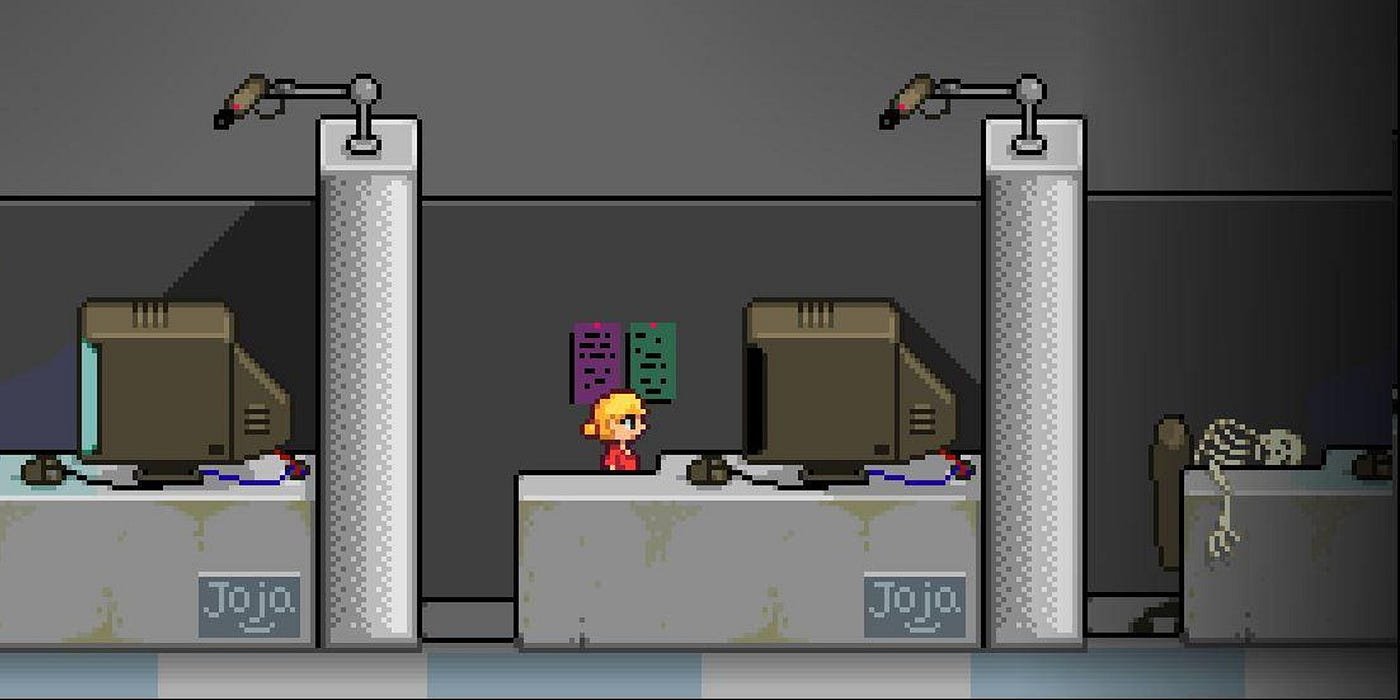
At first glance, it’s easy to describe Stardew Valley as a game about escapism. The game literally starts with the player leaving a corporate job and moving to a farm. There are no strict deadlines, no real failure states, and no pressure to play in a certain way. It feels like a space where you can just leave everything behind.
But the more I think about it, the more I feel like calling it “escapism” is not enough.
Why It Feels Like Escapism
Stardew Valley fits the idea of escapism really well.
You can do whatever you want. There’s no urgency. You don’t have to optimize your time or play efficiently unless you choose to. The game doesn’t punish you for doing nothing, and even if you “waste” a day, it doesn’t really matter.
Compared to a lot of other games, or even real life, this lack of pressure feels freeing.
The opening of the game also reinforces this idea. Leaving behind a corporate environment is a very direct representation of escaping stress, routine, and expectations.
Building a Space That Feels Like Yours
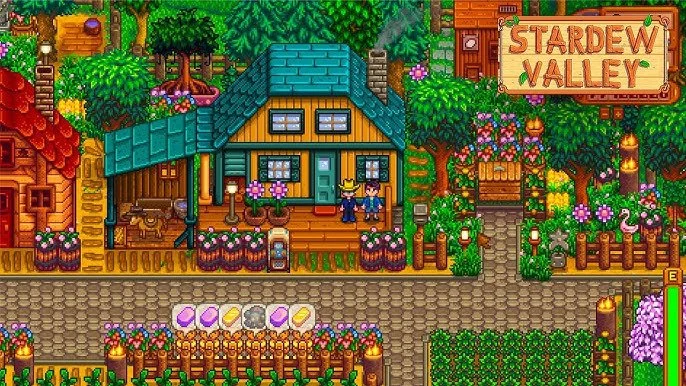
What makes this experience different is that the space is not given to the player as something complete, but something that slowly takes shape through their own decisions. When you first arrive, the farm is messy, empty, and overgrown, but over time you begin to clean it up, remove weeds, cut down trees, plant new ones, and decide how the land should be used.
At the same time, the game allows you to name your farm, decorate your house, rearrange rooms, putting decorations, which makes the space feel personal. None of these choices are forced or optimized for you, and there is no single “correct” way to build your farm, so every layout, every path, and every small detail reflects what the player chose to do. Because of this, the farm stops feeling like a level or a system, and starts to feel like something that belongs to you, not because the game tells you so, but because you made it that way over time.
Small Interactions That Build Attachment
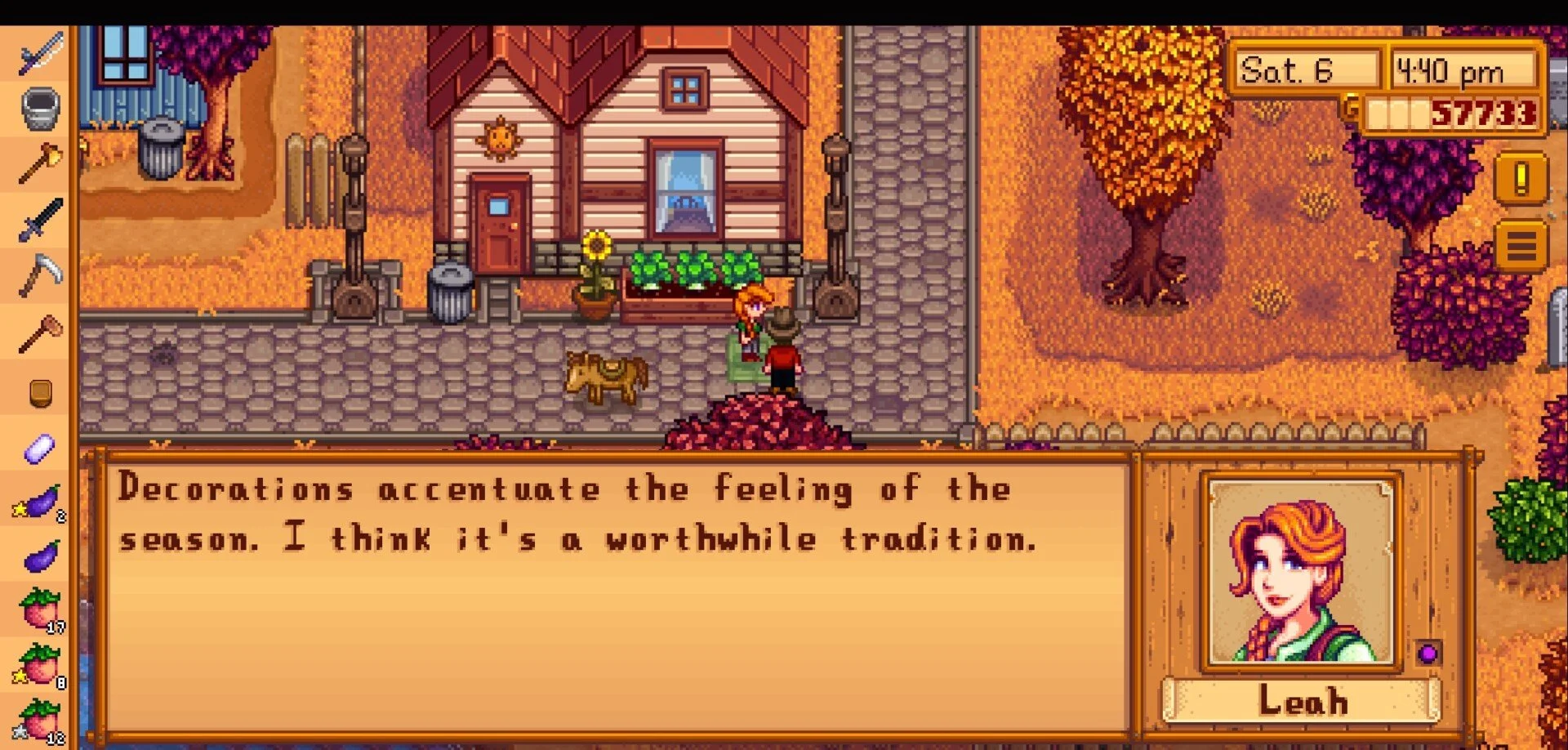
The same thing happens with NPCs, but in a quieter and slower way. The characters in Stardew Valley are actually quite simple compared to those in more narrative-heavy games, but they exist within a consistent routine, appear in familiar places, and respond to your actions over time, which makes them feel more present and alive. As you keep interacting with them (talking, giving gifts, noticing where they go and what they do each day) you start to recognize patterns and remember small details about them, and this familiarity slowly turns into a kind of attachment. There isn’t a single dramatic moment that suddenly makes you care about a character, but rather a gradual process where repeated, small interactions accumulate into something that feels personal, and because of that, the connection feels more natural instead of something the game is trying to force.
When Repetition Becomes Routine
A lot of what you do in Stardew Valley is repetitive.
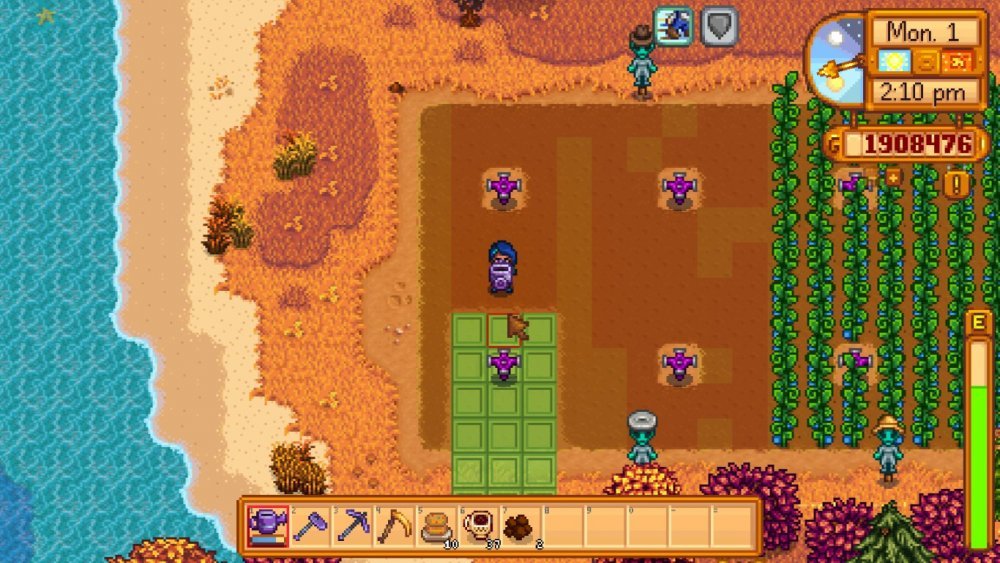
Watering crops, harvesting plants, checking machines, selling your products, finishing — these are not complex actions. But over time, they stop feeling like tasks and start feeling like part of a daily rhythm.
The shift from thinking, “I have to do this,” to “this is just what I do.” is really important.
It’s what makes the game feel calming instead of boring. The repetition creates structure, but because the player chooses that structure, it doesn’t feel forced.
Not Just Escaping, but Staying
This is where I think Stardew Valley moves beyond escapism.
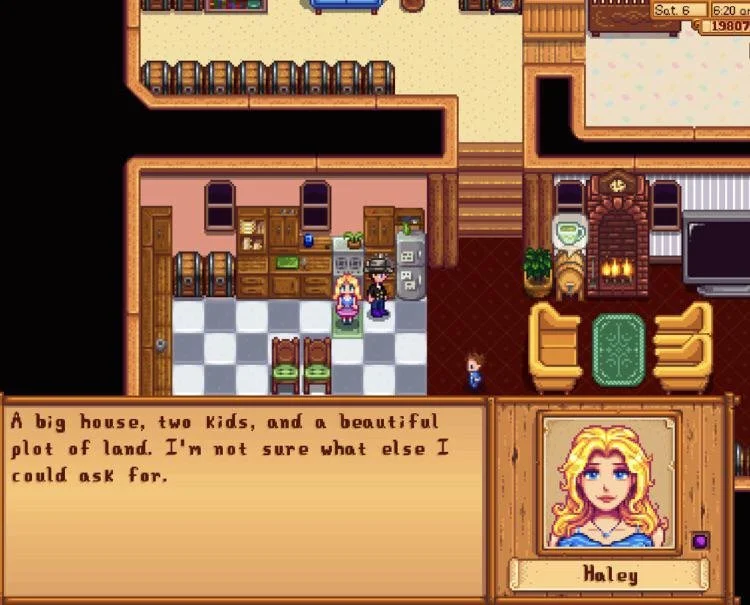
Escapism is about leaving something behind. But Stardew Valley is not just about leaving — it’s about building a place that you want to return to.
The question is not “why do players escape into this world,” but “why do they stay?”
Players stay because they’ve invested time, made choices, and formed connections. The game gives them space to create something meaningful, even if it’s simple.
A Place Players Choose
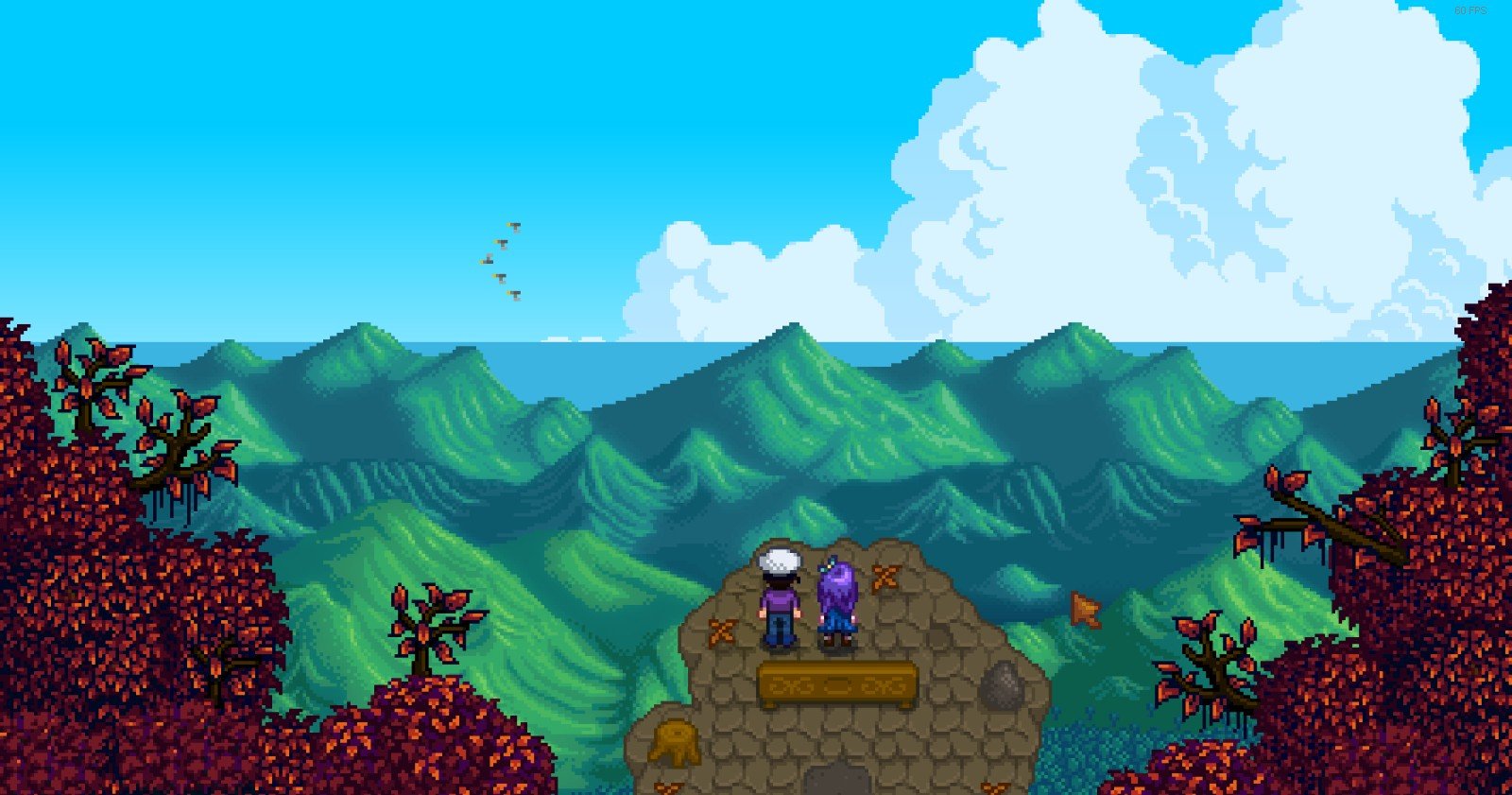
At the beginning, Stardew Valley looks like a game about escaping reality. But over time, it feels less like a place you run to, and more like a place you return to.
What makes this powerful is not just the setting, but how the game builds attachment through small, consistent systems. The farm becomes meaningful because players shape it themselves. NPC relationships feel personal because they develop slowly over time. Even simple mechanics like daily routines create a sense of stability and familiarity.
These elements show that strong player experience doesn’t always come from large, dramatic moments. Instead, it can come from repetition, consistency, and giving players space to invest in the world at their own pace.
For game design, this suggests that creating a sense of belonging may be more important than constantly creating excitement. Systems that support long-term engagement—like player-driven spaces, consistent NPC behavior, and meaningful routines—can make a world feel alive and worth staying in.
Stardew Valley is often described as a form of escapism, but its real strength is something else. It gives players a place that feels worth returning to—and that might be more meaningful than simply escaping.